
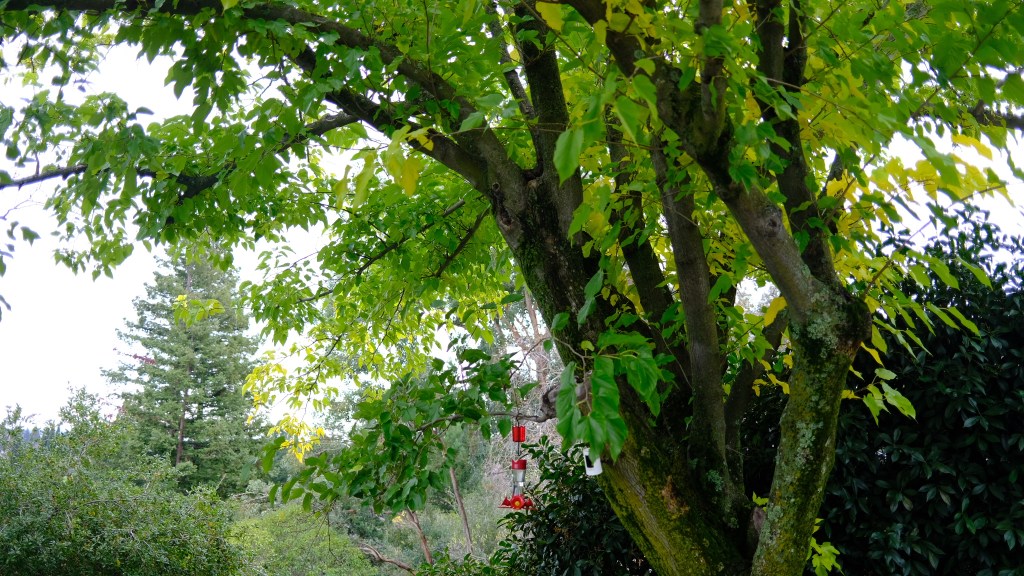
In our backyard is a mulberry tree. It doesn’t bear any fruit, but it gives us a ton of shade during the summer months, when temperatures regularly climb into the high 90s and sometimes higher. It’s a familiar presence, reliable and useful.
What’s strange this year is that it has barely shed its leaves. It’s still full. This is our fifth winter here, and in past years, the leaves would be gone by early December. Right now, they are holding on as if winter hasn’t arrived.
A few weeks ago, I was on a call with a colleague, talking about winter and the sadness that often comes with it. She mentioned that grief seems to accompany winter because, in nature, “death” happens: leaves fall, plants dry up, flowers die.
She was speaking metaphorically. Nature doesn’t actually die; it goes dormant so it can regain her strength. Still, her observation stuck with me, perhaps because every time I look out the window, the tree seems to be telling a different story.
So what is going on with the mulberry in our backyard?
Is it stretching this season for as long as it can before retreating inward?
Will all the leaves finally let go overnight, leaving a yellow pile by morning?
As I sit and write this, I wonder if it’s a signal.
Not a dramatic one, but a reminder to think about longevity, not only in health, but in friendships and relationships. And about making it a priority.
Leave a Reply